The music
What is fado?
Where fado began, what it sounds like, which instruments carry it and why UNESCO lists it: the music behind a night in a Lisbon fado house.
Book fado and tapas ↗Quick answer
Fado is a Lisbon song tradition, usually sung by one singer with a Portuguese guitar and a classical guitar. Its name probably comes from the Latin for fate, and its sound is tied to saudade, a word for longing. Wikipedia places its origins in early nineteenth-century Lisbon, and UNESCO inscribed it in 2011. It is sung in small fado houses and in neighbourhood associations across the city.
The word and the feeling
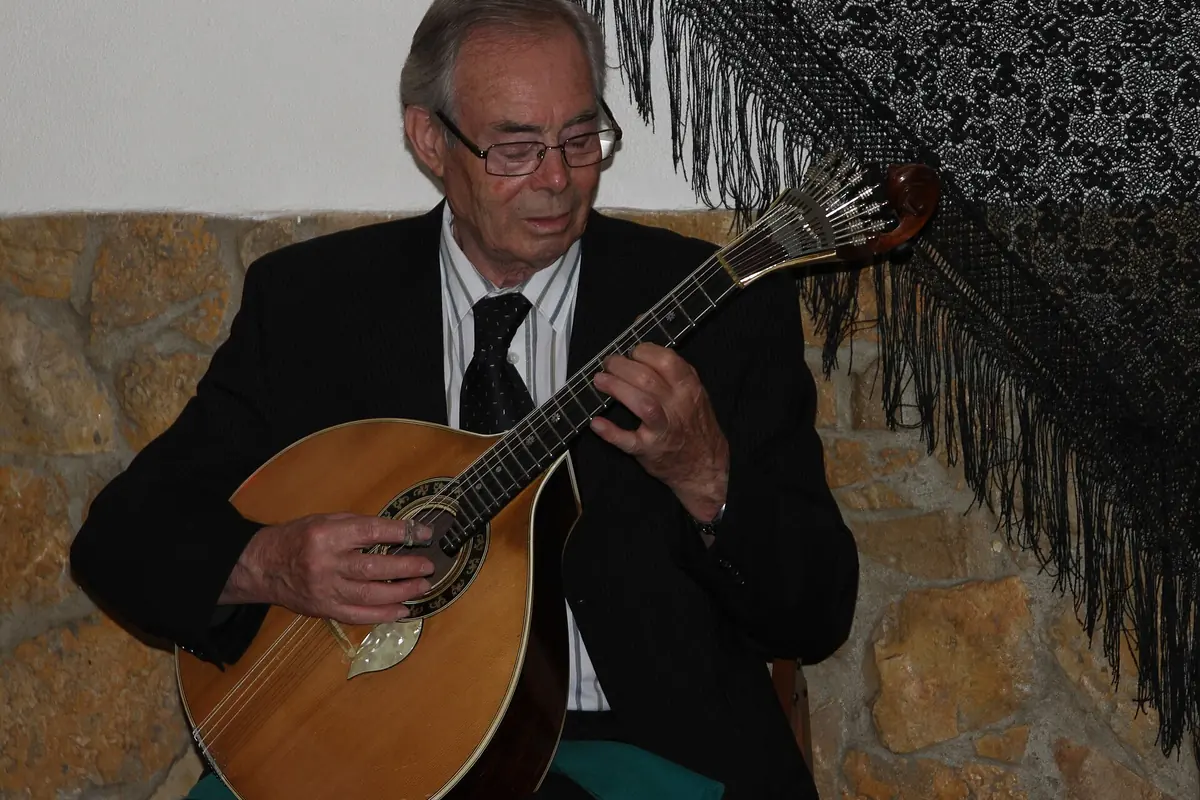
Fado means fate. Wikipedia says the word possibly comes from the Latin fatum, and notes that lyrics often exploit the two senses, as in a famous line asking with what voice one should mourn a sad fate. The feeling most often linked to it is saudade, a Portuguese word for longing, which Wikipedia describes as a sense of loss. That is the popular picture of fado. Wikipedia adds that today fado is commonly regarded as a form of song which can be about anything, but must follow a certain traditional structure.
Where it began
Wikipedia traces fado to the 1820s in Lisbon, with probably earlier roots, and quotes the historian Rui Vieira Nery, who cautions that dependable evidence reaches back no further than the 1820s or 1830s. It is believed to have started in the bohemian districts of the capital, such as Bairro Alto, Mouraria and Alfama, among sailors, working people and tavern regulars. As the century wore on, the dance rhythms faded and the performers became singers, the fadistas. Many theories of the origin exist, and none is certain.
How it sounds
UNESCO presents fado as music and poetry, usually delivered by a lone singer, man or woman, with an acoustic guitar and the guitarra portuguesa, a twelve-string, pear-shaped instrument found only in Portugal. Wikipedia notes the use of rubato: at a phrase's end the music stops and the singer sustains the note for effect. Lonely Planet describes a single performer with at least two musicians, in a dimly lit room where the audience listens in silence.
Lisbon and Coimbra
Wikipedia names two main varieties of fado, linked to Lisbon and Coimbra. The Lisbon style is the better known, and it is the one sung in the city's fado houses. Coimbra fado is tied to the university city and, in tradition, is sung by men in academic dress. Both use the Portuguese guitar, though the instrument differs between them, with its own tuning in Coimbra. A night in a Lisbon fado house is a night of the Lisbon style.
What UNESCO says
UNESCO added fado to its intangible heritage list in 2011. Its text says various communities in Lisbon practise it, and traces a mixture of sung dances from Afro-Brazilian tradition, local songs and dances, country music brought by migrants from the provinces and the urban song of the early 1800s. It adds that professionals perform it on concert stages and in the small fado houses, while amateurs keep it going in neighbourhood associations.
Houses, associations and teachers
That last point matters for a visit. UNESCO says respected older exponents teach informally in the traditional performance spaces, often across generations of the same families. A fado house that calls itself an association or an academy belongs to that world: a place where fado is learned and passed on as well as performed. The booking page for the tapas night describes singers of different generations and informal nights, which fits that picture, though no ticket can promise who sings on a given date.
The Fado Museum
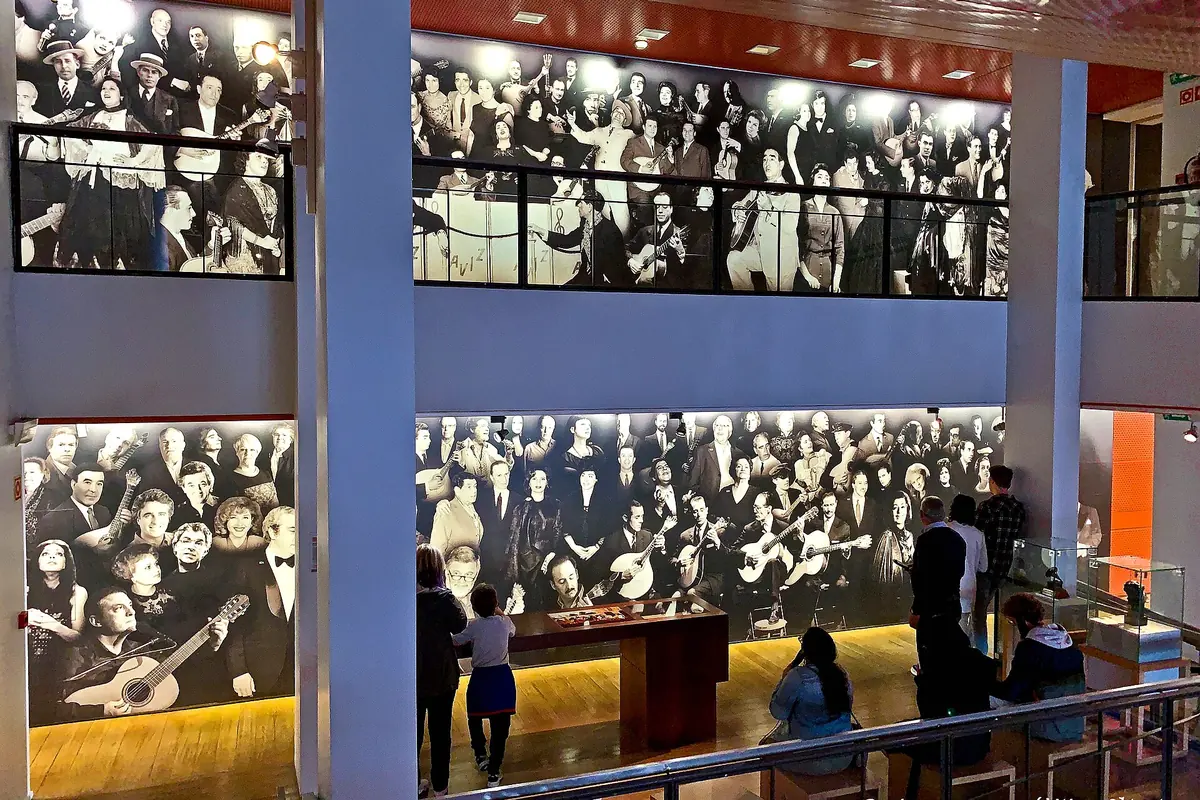
If you want more after an evening, the Fado Museum in Alfama is dedicated to the music. Wikipedia says it was inaugurated on 25 September 1998, in a building that was formerly a pumping station for Lisbon's water supply, and that since 2016 its website has hosted a digital sound archive of thousands of recordings going back to the early twentieth century. The permanent exhibition shows artworks and objects connected with fado. It is a separate visit and a separate ticket from any evening in a fado house.
Frequently asked questions
What does fado mean?
Fado means fate. Wikipedia says the word possibly comes from the Latin fatum.
What instruments are used in fado?
A lone singer is usually backed by an acoustic guitar and the Portuguese guitarra, a twelve-string, pear-shaped instrument.
When was fado added to the UNESCO list?
UNESCO put fado on its intangible heritage list in 2011.
Is fado always sad?
Popular belief links it to saudade, a word for longing, but Wikipedia says fado can be about anything if it follows the traditional structure.
Sources